

Electromagnetic Theory: An In-Depth Exploration
Introduction
Electromagnetic theory is a fundamental branch of physics that deals with the study of electric and magnetic fields and their interactions with matter. It provides a comprehensive framework for understanding a wide range of phenomena, from the behavior of electric circuits to the propagation of light and radio waves. This theory is essential for numerous technological advancements and forms the basis for modern electrical engineering, telecommunications, and many other scientific fields.
Historical Background
The development of electromagnetic theory began in the early 19th century with the work of scientists such as Hans Christian Ørsted, André-Marie Ampère, Michael Faraday, and James Clerk Maxwell. Ørsted’s discovery of the relationship between electricity and magnetism laid the groundwork for further exploration. Faraday’s experiments with electromagnetic induction and Maxwell’s formulation of the classical theory unified electricity, magnetism, and optics into a single theoretical framework.
Fundamental Concepts
- Electric Fields
An electric field is a region around a charged particle where a force would be exerted on other charged particles. It is represented by electric field lines that indicate the direction and magnitude of the force. The electric field strength (E) is defined as the force (F) per unit charge (q), E = F/q. - Magnetic Fields
Magnetic fields arise from moving electric charges (currents) and intrinsic magnetic moments of elementary particles. They are represented by magnetic field lines that form closed loops. The magnetic field strength (B) is a vector quantity measured in teslas (T). - Electromagnetic Waves
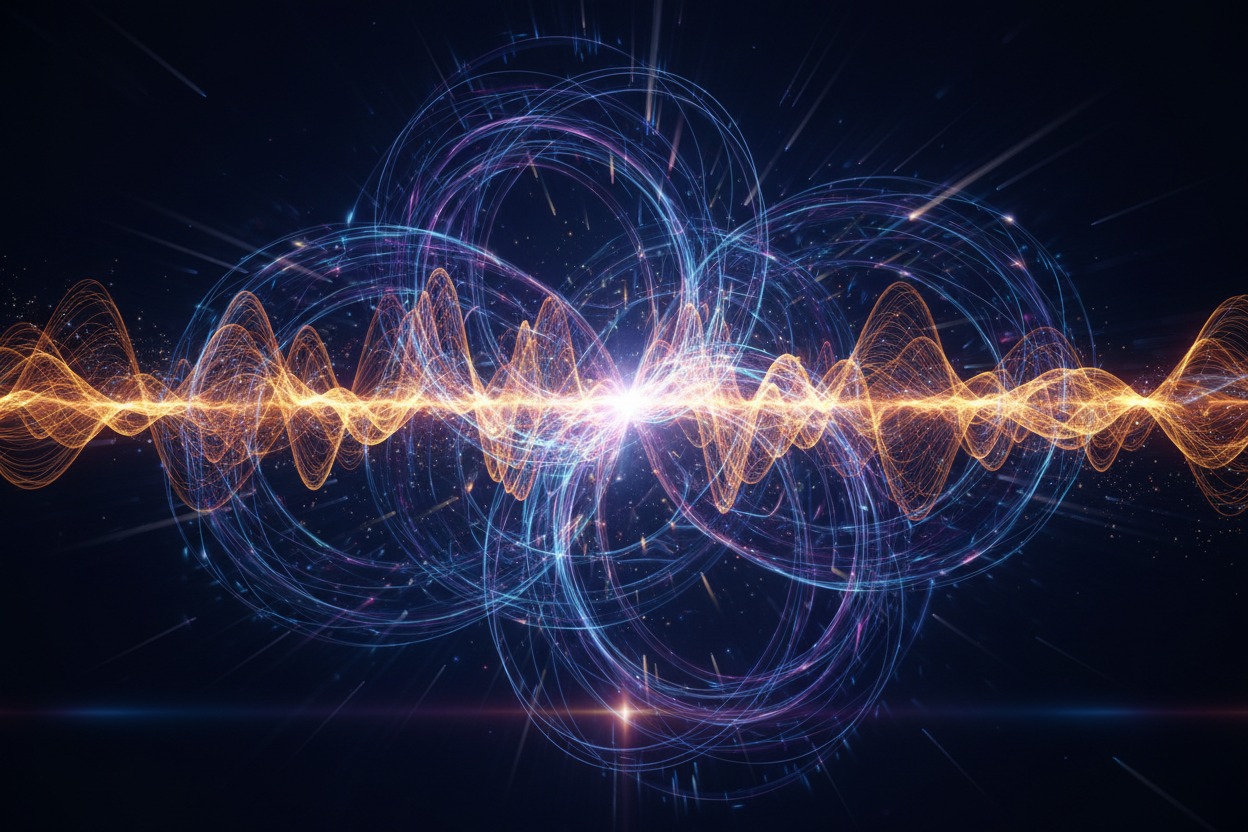
Electromagnetic waves are oscillations of electric and magnetic fields that propagate through space at the speed of light (approximately 3 x 10^8 m/s). These waves include radio waves, microwaves, infrared, visible light, ultraviolet, X-rays, and gamma rays. They are characterized by their wavelength, frequency, and amplitude.
Maxwell’s Equations
At the heart of electromagnetic theory are Maxwell’s equations, which describe how electric and magnetic fields are generated and altered by each other and by charges and currents. These four equations are:
- Gauss’s Law for Electricity: Describes the relationship between electric charge and electric field.
- Gauss’s Law for Magnetism: States that there are no magnetic monopoles; magnetic field lines are continuous.
- Faraday’s Law of Induction: Explains how a changing magnetic field produces an electric field.
- Ampère-Maxwell Law: Relates magnetic fields to electric currents and changing electric fields.
These equations not only unify electricity and magnetism but also predict the existence of electromagnetic waves.
Applications of Electromagnetic Theory
- Communication Technologies
Electromagnetic waves are fundamental to wireless communication systems such as radio, television, mobile phones, and satellite transmissions. - Electrical Engineering
Design and analysis of electrical circuits, transformers, and motors rely heavily on electromagnetic principles. - Medical Imaging
Techniques like MRI (Magnetic Resonance Imaging) use magnetic fields and radio waves to produce detailed images of the body. - Optics
Understanding light as an electromagnetic wave has led to advancements in lenses, lasers, and fiber optics. - Power Generation and Transmission
Electromagnetic induction is the principle behind electric generators and transformers, crucial for electricity supply.
Conclusion
Electromagnetic theory is a cornerstone of modern science and technology, enabling us to comprehend and harness the forces that govern electric and magnetic phenomena. From the microscopic interactions of charged particles to the vast expanse of electromagnetic radiation in the universe, this theory continues to be pivotal in driving innovation and deepening our understanding of the natural world.